Living with hard water can be a daily struggle, from stubborn scale buildup on fixtures to dry skin after a shower. A water softener is an invaluable appliance that transforms your home’s water quality, but its effectiveness hinges on one crucial element: salt. Understanding how often should you add salt to a water softener DIY is paramount to keeping your system running smoothly and your water consistently soft. This guide will walk you through everything you need to know to maintain your water softener’s salt levels like a pro, ensuring you continue to enjoy the benefits of soft water without interruption.
Understanding Your Water Softener’s Salt Consumption
A water softener works through a process called ion exchange, removing hard water minerals like calcium and magnesium from your water supply. This system contains resin beads that trap these minerals as water passes through. To remain effective, these beads must be regularly “recharged” or regenerated.
How Ion Exchange Works
Table is empty.The core of water softening involves resin beads that have a negative charge and are coated with positively charged sodium ions. When hard water flows through the softener, the resin beads attract the positively charged calcium and magnesium ions (hard water minerals), exchanging them for the sodium ions. This effectively removes the hardness from your water.
The Role of Salt in Regeneration
Once the resin beads are saturated with hard minerals, they can no longer soften water. This is where salt comes in. The water softener uses a concentrated saltwater solution, called brine, from the brine tank to flush these accumulated minerals from the resin beads. During this regeneration cycle, the sodium ions from the brine solution replace the hard minerals on the resin beads, which are then washed away down the drain. Without an adequate salt supply, your softener cannot produce the brine needed for regeneration, leading to a return of hard water issues.
Key Factors Influencing Salt Refill Frequency
The frequency at which you need to add salt to your water softener is not a one-size-fits-all answer. Several factors contribute to how quickly your system depletes its salt supply.
Water Hardness Levels
One of the most significant determinants of salt usage is the hardness of your incoming water. Water hardness is typically measured in grains per gallon (gpg). The higher the gpg, the more hard minerals are present, and the more frequently your softener will need to regenerate to remove them. Consequently, homes in areas with very hard water will consume salt faster than those in areas with moderately hard water.
Household Size and Water Usage
The amount of water your household uses directly correlates with how often your softener regenerates. Larger families or households with high water consumption—due to frequent laundry, long showers, or extensive outdoor watering—will cause the resin beads to become saturated more quickly. This increased demand necessitates more frequent regeneration cycles and, therefore, more frequent salt refills. For instance, a small household might need salt every 6-8 weeks, while a large family could need it every 2-3 weeks.
Water Softener Efficiency and Settings
The type, age, and settings of your water softener also play a role. Older, time-based systems might regenerate on a fixed schedule, regardless of actual water usage, potentially leading to more salt consumption. Modern, demand-initiated (volumetric) softeners are more efficient, regenerating only when necessary based on actual water consumption, thus optimizing salt use. [cite: 4, 5 (factors affecting salt usage)] The size of your brine tank is also relevant; smaller tanks naturally require more frequent topping off.
Types of Water Softener Salt
The kind of salt you use can subtly affect how often you need to refill. While not a primary driver of frequency, some salt types are purer and dissolve more efficiently, potentially reducing issues that might make you think you need to add salt more often (like a salt bridge). Higher purity salts minimize residue buildup, ensuring optimal system performance. [cite: 1 (salt types)]
The DIY Guide: When and How to Add Salt
Regularly checking and refilling your water softener’s salt is a simple DIY task that can save you from inconvenient hard water issues.
Regular Visual Checks: The 1/4 Tank Rule
Experts generally recommend checking your brine tank’s salt level at least once a month. This allows you to catch low levels before they impact your water quality. A good rule of thumb is to refill your brine tank when the salt level drops to about one-quarter full, or if you notice the water level is above the salt. Many suggest keeping the tank at least halfway full, or even two-thirds full, to ensure consistent performance and prevent issues like salt bridging. [cite: 2 (salt bridge fix), 3, 5]
> “Pro Tip: Set a monthly reminder to inspect your brine tank. Not only for refills but also to ensure the salt isn’t clumping at the bottom, which can hinder proper regeneration.” – Reviewcopia Team, Water Treatment Expert
The Salt Bridge: What It Is and How to Fix It
A common issue homeowners encounter is a “salt bridge.” This occurs when the salt in the brine tank hardens into a solid crust, forming an arch above the water level. Even if the tank appears full of salt, this bridge prevents the salt from dissolving into the water below, effectively starving your softener of the brine solution it needs for regeneration. [cite: 1, 2 (salt bridge), 4 (salt bridge)] Signs of a salt bridge often mimic hard water symptoms, such as spots on dishes or a lack of lather from soap. [cite: 2 (signs water softener needs salt), 3 (how to find out if running low)]
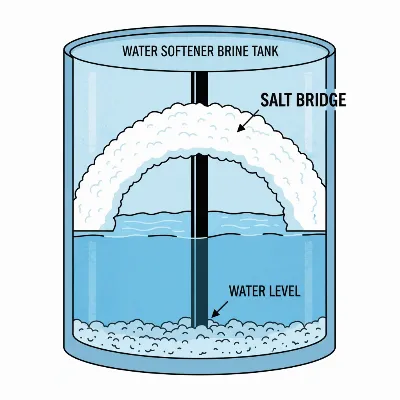 A diagram illustrating a salt bridge in a water softener brine tank, showing a hardened crust of salt above the water line.
Step-by-Step: Adding Salt to Your Brine Tank
Adding salt is a straightforward process:
- Locate Your Brine Tank: This is typically a separate, often shorter, tank next to your main softener unit. [cite: 4 (how much salt), 5 (how to check)]
- Open the Lid: Carefully lift the lid to your brine tank.
- Check for Salt Bridge (if suspected): If you suspect a salt bridge, gently push a long-handled, blunt tool (like a broom handle) into the salt. If you encounter resistance, you likely have a salt bridge. Break it up by gently tapping the crust until it falls apart. Be very careful not to damage the tank walls or internal components. [cite: 1 (salt bridge fix), 2 (salt bridge fix), 3 (salt bridge fix), 4 (salt bridge fix)]
- Add Salt: Pour your chosen water softener salt into the tank. Aim to fill it to the recommended level (usually halfway to two-thirds full), ensuring the salt level remains above the water line. Avoid overfilling to prevent potential salt bridging. [cite: 4 (how much salt), 5 (how to check)]
- Close the Lid: Securely replace the lid on your brine tank to prevent contaminants and moisture from entering.
- Initiate Regeneration (if needed): If your system ran out of salt or you fixed a salt bridge, manually initiate a regeneration cycle according to your manufacturer’s instructions to ensure the resin beads are properly recharged.
Choosing the Right Salt for Your System
The type of salt you use can impact your softener’s efficiency and maintenance needs. While all types help regenerate the resin, some are better suited for specific conditions or preferences.
| Salt Type | Pros | Cons |
|---|---|---|
| Pellets | Most common, high purity, dissolve evenly, minimal residue. [cite: 1 (salt types)] | Generally pricier than crystal/rock salt. |
| Crystals (Solar Salt) | Cost-effective, produced by natural evaporation. [cite: 1 (salt types)] | Can leave residue, prone to clumping in humid environments. [cite: 1 (salt types)] |
| Rock Salt | Budget-friendly, mined from underground deposits. [cite: 2 (salt types)] | Lower purity, more impurities, can leave more residue. [cite: 2 (salt types)] |
| Block Salt | Easy to handle (4kg blocks), suitable for efficient softeners. [cite: 3 (salt types)] | More expensive per weight, not suitable for all softener types. [cite: 3 (salt types)] |
| Potassium Chloride | Sodium-free alternative, good for low-sodium diets. [cite: 1 (salt types)] | Less efficient (may require more frequent regeneration), more expensive. [cite: 1 (salt types), 5 (salt types)] |
For most residential water softeners, high-purity salt pellets are the recommended choice due to their even dissolution and minimal residue, which helps prevent issues like salt bridges and mushing. [cite: 1 (salt types)] If you are concerned about sodium intake, potassium chloride offers an alternative, though it typically comes at a higher cost and may require more frequent refills. [cite: 1 (salt types), 5 (salt types)]
Troubleshooting Common Salt-Related Issues
Even with regular maintenance, you might encounter issues related to your water softener’s salt.
Water Softener Not Using Salt
If your water softener’s salt level doesn’t seem to be dropping, several problems could be at play:
- Salt Bridge: This is the most common culprit. A hardened crust of salt prevents the lower salt from dissolving.
- Clogged Brine Line: The tube that carries the brine solution might be blocked by sediment or salt mushing.
- Malfunctioning Float Valve: The float valve controls the water level in the brine tank. If stuck, it can cause overfilling or prevent brine from being drawn into the system. [cite: 4 (salt bridge fix)]
- Injector Blockage: The injector (or venturi) creates the suction to draw the brine into the resin tank. A blockage here will stop the regeneration process. [cite: 4 (salt bridge fix)]
- Incorrect Settings: Your softener might be set to regenerate too infrequently or be programmed incorrectly.
Salt Bridge Formation
As discussed, a salt bridge is a crust of salt that prevents proper brine formation. To reiterate the fix: gently break the bridge with a blunt tool, remove loose chunks, and ensure the salt can make contact with the water. Pouring a small amount of warm (not hot) water can help dissolve stubborn areas. [cite: 1 (salt bridge fix), 2 (salt bridge fix)] To prevent future salt bridges, avoid overfilling the tank, use high-quality salt, and ensure the brine tank lid is securely in place to minimize moisture. [cite: 2 (salt bridge fix)]
Understanding Low Salt Indicators
Many modern water softeners come equipped with a low salt indicator or alarm. These systems alert you when the salt level is getting low, providing a convenient reminder to refill. If your system doesn’t have such an alert, or if you notice changes like hard water spots on dishes or increased soap usage, it’s a clear sign to check your salt levels manually. [cite: 2 (signs water softener needs salt), 3 (how to find out if running low)]
Beyond Salt: Essential Water Softener Maintenance Tips
While salt management is crucial, comprehensive maintenance ensures your water softener operates efficiently for years.
Cleaning the Brine Tank
Over time, salt residue and impurities can accumulate at the bottom of the brine tank, forming a thick sludge or “mushing.” This can impede brine production and affect regeneration efficiency. Periodically (e.g., once a year or if you notice significant mushing), empty the brine tank, scoop out any sludge, and clean it with mild soap and water before refilling with fresh salt.
Monitoring Water Quality
Even with regular salt refills, it’s a good idea to periodically test your water hardness. Home testing kits are readily available and can confirm if your system is effectively softening the water. If you notice a sudden return of hard water symptoms despite having enough salt, it could indicate a more serious issue with your softener.
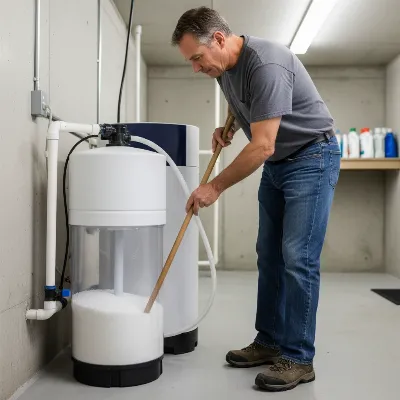 A person performing routine maintenance on a home water softener, checking salt levels and inspecting the brine tank in a clean utility room.
When to Call a Professional
While many salt-related issues are DIY-friendly, some problems warrant professional attention. If you’ve refilled the salt, broken up any bridges, and manually regenerated, but your water remains hard, or if you notice unusual noises, leaks, or persistent system alerts, it’s time to contact a qualified water softener technician. They can diagnose complex issues like valve malfunctions, clogged injectors, or resin bed problems. [cite: 4 (how much salt)]
Conclusion
Maintaining your water softener’s salt levels is a simple yet vital task for every homeowner with a softening system. By understanding the factors that influence salt consumption, performing regular visual checks, and knowing how to troubleshoot common issues like salt bridges, you can ensure your water softener continues to provide consistently soft water. Remember to check your brine tank at least once a month, keep it filled to at least one-quarter full, and choose the right salt type for your system. Taking these small, proactive steps will not only extend the life of your appliance but also safeguard your home against the myriad problems associated with hard water. What steps will you take this month to ensure your water softener is performing at its best?
Frequently Asked Questions
How much salt should I add to my water softener?
Generally, aim to keep your brine tank at least halfway full, or ideally, two-thirds full, to ensure continuous soft water. Never let the salt level drop below one-quarter full, and make sure the salt always stays above the water line to prevent issues with brine production. [cite: 2 (how much salt), 3, 5]
Can I use any type of salt in my water softener?
While various salt types are available (pellets, crystals, rock, block, potassium chloride), high-purity salt pellets are usually recommended for most residential softeners due to their efficiency and minimal residue. Always check your softener’s manual for specific manufacturer recommendations. [cite: 1 (salt types), 2 (salt types)]
What happens if I don’t add salt to my water softener?
If you don’t add salt, your water softener’s resin beads won’t be able to regenerate. This means they will stop removing hard water minerals, and your home’s water will revert to being hard, leading to scale buildup, spots on dishes, and less effective soap and detergent use.
How long does water softener salt last?
The duration a salt refill lasts depends heavily on your water’s hardness, your household’s water consumption, and the efficiency of your softener. For an average household, checking monthly and refilling every 4-8 weeks is common, while larger families or very hard water areas might need refills more frequently, every 2-3 weeks.
Is it bad to let my water softener run out of salt?
Yes, it is detrimental to let your Water Softener run out of salt. Doing so stops the regeneration process, allowing hard water minerals to pass through and potentially build up in your system and plumbing, leading to inefficiency and costly repairs over time.