Choosing the right water softener for well water is essential for protecting your home and enhancing quality of life, especially since well water often contains higher concentrations of minerals like calcium, magnesium, iron, and sulfur compared to municipal supplies. The best water softeners for well water in 2026, such as the SpringWell SS Salt-Based System, effectively reduce hardness by over 97% and can remove up to 3 PPM of clear-water iron, preventing scale buildup, appliance damage, and dry skin.
Water Softener: Your Solution for Hard Well Water
What is Hard Water? The Impact of Hardness on Well Systems
Hard water is characterized by an excessive amount of dissolved minerals, primarily calcium and magnesium. This condition occurs naturally as groundwater flows through soil and rock, picking up these minerals along the way. For well owners, this often means dealing with significantly harder water than those on municipal supplies.
The presence of hard water creates a cascade of problems throughout your home. You’ll likely notice unsightly white, chalky scale buildup on faucets, showerheads, and inside pipes, which can reduce water flow and pressure over time. Appliances that use water, such as water heaters, washing machines, and dishwashers, suffer from mineral deposits that decrease efficiency and shorten their lifespan. You might also experience dry, itchy skin and dull hair after showering, and your laundry may feel stiff and look faded, even with ample detergent. Beyond calcium and magnesium, well water frequently contains iron, which can cause reddish-brown stains, and sulfur, which produces an unpleasant “rotten egg” smell. Manganese can lead to blackish staining. Regular testing of your well water is crucial, as its mineral content can fluctuate seasonally, requiring adjustments to your treatment approach. For see our home water recommendations on this site.
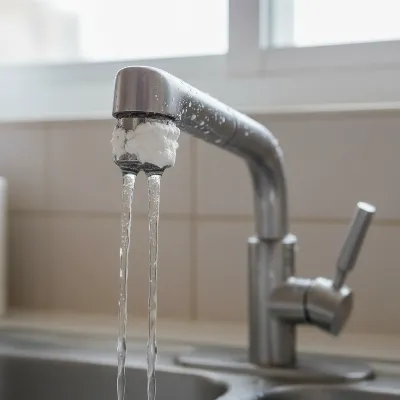 Scale buildup on a kitchen faucet, illustrating the damaging effects of hard water on home fixtures
What is a Water Softener? How Ion Exchange Works for Well Water
A water softener is a whole-house system designed to remove hardness-causing minerals from your water supply. The most common and effective type of water softener operates on the principle of ion exchange. Inside the softener’s mineral tank, there’s a bed of resin beads, typically charged with sodium ions (or sometimes potassium ions). As hard water enters the tank, the positively charged calcium and magnesium ions are attracted to the resin beads and “exchanged” for the sodium ions. The softened water, now free of hardness minerals, then flows out to your home.
The system also includes a brine tank, which holds a concentrated salt solution. Periodically, the resin beads become saturated with calcium and magnesium and need to be “regenerated.” During this cycle, the control valve directs the brine solution from the brine tank into the mineral tank, flushing the accumulated hardness minerals off the resin beads and replenishing them with fresh sodium ions. The displaced hardness minerals and excess brine are then discharged down a drain. This process ensures a continuous supply of soft water for your household.
Types of Water Softeners Ideal for Well Water
|
Our Picks for the Best Water Softener in 2026
As an Amazon Associate I earn from qualifying purchases.
|
||
| Num | Product | Action |
|---|---|---|
| 1 | RV Water Softener System with Heavy Metal Filter & Protective Cover | 16,000 Grain Capacity | Removes Odors, Extends Resin Life 15% | Universal Fit for Motorhome, Camper, Travel Trailer |

|
| 2 | Crystala Filters Portable RV Water Softener, 16,000 Grain with Stainless Steel Garden Hose Quick Connects for RVs, Trailers, Boats, Mobile Car Washing, Pressure Washing |
|
| 3 | iSpring ED2000 Whole House Water Descaler, Alternative Electronic Salt-Free Hard Water Conditioner, Reduces Limescale Prevent Deposits Build-up, Different from a Water Softener |
|
| 4 | On The Go OTG4-VM-DBLSOFT Portable Compact Double Standard 16,000 Grain Water Softener with Drinking Water Safe Brass Fittings (NOT made in China, assembled by U.S. Workers in Indiana |
|
| 5 | RVGUARD 16,000 Grains Portable Water Softener for RV, Reduces Hardness & Minerals & Improve Water Quality, Protects Water Systems from Hard Water Damage |
|
| 6 | Electronic Water Descaler System for Whole House, Salt-Free Water Softener - Compatible with Most Pipes, Prevents Limescale Build-Up, Easy Install & Maintenance-Free |
|
| 7 | PRO+AQUA 16,000 Grain Portable Water Softener for RV, Trailers, Boats, Mobile Car Wash, Pressure Wash – Protects Water Systems from Hard Water Damage and Corrosion, with Pre-Filled High-Capacity Resin |
|
| 8 | RV Water Softener with Water Hose, 16000 Grains 3/4" Brass Fittings Food-Grade Resin Soften Hard Water Improve Water Quality Portable Water Softener for RV, Trailers |
|
| 9 | H&G Lifestyles Whole House Water Softener 32,000 Grains, NSF certified Whole Home Water Filtration System for Well & City Water, Remove Calcium Magnesium, Food Grade Resin, Silver-Enhanced, 700,000 Gl |
|
| 10 | VEVOR RV Water Softener, 16,000 Grain Portable Water Softener, with 3/4" Brass Fittings and 42" Hose, Soften Hard Water Filter System for RVs, Trailers, Boats, Mobile Car Washing, Pressure Washing |
|
When selecting a water softener for well water, it’s essential to understand the different technologies available, as each has unique advantages and considerations for your specific well water challenges.
- Salt-Based (Ion Exchange) Water Softeners: These are the most prevalent and effective systems for true water softening. They physically remove calcium and magnesium ions through the ion exchange process described above.
- Pros: Highly effective at reducing hardness to near zero, improves soap lather, prevents scale, and can often remove low levels of clear-water iron. Dual-tank models are available, offering a continuous supply of soft water even during regeneration cycles, which is ideal for large families or high water usage.
- Cons: Requires regular salt refills, uses water during regeneration, and adds a small amount of sodium or potassium to the water. Proper disposal of brine wastewater is also a consideration.
- Salt-Free Water Conditioners (Template Assisted Crystallization – TAC): These systems do not remove hardness minerals but instead alter their molecular structure, typically through a process called Template Assisted Crystallization (TAC). This prevents minerals from sticking to surfaces and forming hard scale.
- Pros: No salt required, no wastewater, minimal maintenance, and eco-friendly. The beneficial minerals remain in the water.
- Cons: Does not truly “soften” water; rather, it conditions it to prevent scale. Its effectiveness on very high levels of hardness or certain contaminants like iron is less pronounced compared to salt-based systems. Other salt-free options like magnetic or electronic descalers have widely debated effectiveness.
- Combination Systems: For well water, which often contains more than just hardness, a combination system is frequently the best solution. These units integrate a water softener with a whole-house filter (e.g., for iron, sediment, or sulfur). This multi-stage approach provides comprehensive treatment, tackling hardness while simultaneously filtering out other common well water contaminants.
Comparison Table: Key Water Softener Types for Well Water
| Feature | Salt-Based Water Softener (Ion Exchange) | Salt-Free Water Conditioner (TAC) |
|---|---|---|
| Primary Function | Removes hardness minerals (calcium, magnesium) | Prevents scale buildup by crystallizing minerals |
| Effectiveness | Highly effective, reduces hardness to near zero | Prevents scale, but minerals remain in water |
| Maintenance | Requires regular salt refills, periodic brine tank cleaning | Minimal maintenance, no salt or backwashing |
| Water Waste | Yes, during regeneration cycle | No wastewater |
| Sodium Added | Small amount added to treated water | No sodium added |
| Iron Removal | Effective for clear-water iron up to certain PPM (often 3-5 PPM) | Generally not effective for iron removal |
| Cost (Operating) | Ongoing cost for salt and regeneration water | Very low, no salt cost |
| Best For | Very hard water, high iron, desire for truly soft water, improved soap lather | Moderate hardness, eco-conscious, scale prevention, health concerns about sodium |
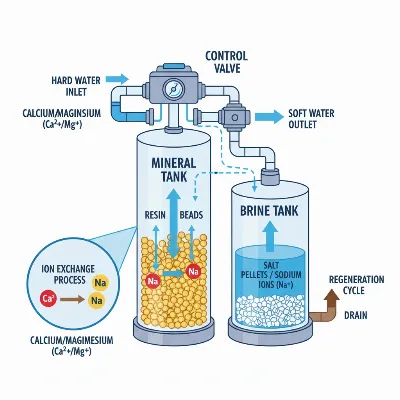 A clear, labelled diagram showing the components and ion exchange process of a salt-based water softener
Top 10 Best Water Softeners for Well Water in 2026
Choosing the best water softener for well water requires considering its unique challenges, such as higher hardness levels, iron content, and sometimes sediment or sulfur. Here are top systems highly rated for their performance and reliability in 2026:
- SpringWell SS Salt-Based Water Softener System: Often lauded as the best overall, the SpringWell SS delivers exceptional hardness reduction (over 97%) and boasts impressive flow rates of up to 20 GPM. It’s effective at removing up to 3 PPM of clear-water iron. Its smart control features allow for convenient monitoring and adjustments via a smartphone app, optimizing efficiency and salt usage.
- SoftPro Elite Water Softener for Well Water: The SoftPro Elite is a favorite among plumbers for its superior iron removal capabilities (up to 3 PPM) and advanced upflow regeneration technology, which significantly cuts salt and water usage by up to 75%. It offers customizable grain capacities, making it a versatile and cost-effective solution for challenging well water conditions.
- Fleck 5600SXT Water Softener: Renowned for its durability and user-friendly design, the Fleck 5600SXT is a robust, budget-friendly option. It’s often recommended for DIY installation and provides reliable performance, making it a popular choice for homeowners seeking a straightforward and effective salt-based system without premium features.
- SpringWell WSSS Filter & Softener Combo: For well water with iron levels exceeding 3 PPM, the SpringWell WSSS is an excellent integrated solution. This powerful combination system filters out higher levels of iron, sediment, and sulfur, in addition to softening water. It’s a comprehensive treatment system designed to tackle multiple complex well water issues effectively.
- DROP Smart Water Softener: A premium choice for tech-savvy homeowners, the DROP Smart Water Softener integrates seamlessly with smart home systems. It offers real-time water usage monitoring, leak detection, and customizable regeneration cycles, providing both efficient softening and enhanced home protection.
- Whirlpool WHES40E Water Softener: This user-friendly and affordable system is an ideal choice for modest households (up to five people) with standard hard well water. The Whirlpool WHES40E is praised for its efficient regeneration and compact design, delivering reliable softened water without a steep price tag or complex operation.
- Kinetico Premier Series Water Softeners: Kinetico systems stand out for their non-electric, dual-tank design, which ensures a continuous supply of soft water even during regeneration. Their demand-driven operation means they only regenerate when necessary, saving salt and water, and they are known for exceptional reliability and uninterrupted service.
- SpringWell Futuresoft Salt-Free Water Softener: As a leading salt-free alternative, the SpringWell Futuresoft system utilizes Template Assisted Crystallization (TAC) technology to prevent scale buildup by transforming hardness minerals into harmless crystals. It’s an excellent choice for those who prefer to avoid salt and wastewater, offering remarkable scale prevention without removing beneficial minerals.
- Yarna Capacitive Electronic Water Descaler: The Yarna descaler offers a maintenance-free, salt-free approach to scale reduction. By using electronic pulses, it alters mineral properties to prevent them from adhering to surfaces. While not a traditional softener, it serves as a viable alternative for preventing scale buildup without altering water chemistry.
- Culligan Water Softeners: While not a single model, Culligan offers a range of water softeners that are highly regarded for well water, backed by professional service and comprehensive warranties. Their systems often feature smart technology that learns water usage patterns to optimize efficiency, and they provide tailored solutions for various well water challenges.
- Salt Management: Check the salt level in your brine tank monthly. Keep it at least one-quarter full, or a few inches above the water line, and always use high-purity evaporated salt pellets to prevent “salt mushing” or salt bridges. Break up any salt bridges (hard crusts of salt that form) with a broom handle if detected.
- Brine Tank Cleaning: Aim to clean your brine tank thoroughly once or twice a year. This prevents sediment and sludge buildup, which can impair regeneration efficiency. Turn off the softener, empty the tank, scrub with warm, soapy water, and rinse well before refilling with salt.
- Resin Bed Care: The resin beads have a finite lifespan. While a well-maintained resin bed can last 10-15 years, monitor your system’s performance. A noticeable decrease in softness or an increase in regeneration frequency can indicate it’s time for resin replacement.
- Water Testing: Periodically retest your well water to ensure the softener is still operating effectively and that water quality hasn’t changed.
- Pre-Filter Maintenance: If you have a pre-filter for sediment or other contaminants, follow its maintenance schedule (typically cartridge replacement) diligently, as a clogged pre-filter can reduce water flow and strain your softener.
ol>
How to Choose the Right Water Softener for Your Well
Selecting the ideal water softener for your well requires a systematic approach tailored to your unique circumstances. Making an informed decision ensures you invest in a system that truly meets your needs and provides lasting benefits.
First and foremost, water testing is crucial. Unlike city water, well water quality can vary significantly by location and even fluctuate seasonally. You must get a comprehensive water test to determine your water’s hardness level (measured in grains per gallon, or GPG), the presence and concentration of iron (in parts per million, PPM), manganese, pH levels, and any sulfur content. These results are the foundation of your decision.
Next, size the system correctly. The #1 mistake homeowners make is choosing an incorrectly sized unit. To determine the appropriate grain capacity for your softener, multiply your daily water usage (typically estimated at 75 gallons per person) by your water’s hardness level (GPG). Factor in any iron by adding 5 GPG for every 1 PPM of iron. Aim for a system that can handle your weekly hardness load, allowing for regeneration cycles every 3-7 days. Overestimating capacity slightly is better than undersizing, which leads to frequent, inefficient regeneration and a shorter system lifespan.
Consider the flow rate (GPM) of the system. Ensure it’s adequate for your household’s peak water demand to avoid pressure drops when multiple fixtures are in use. Also, look for a softener with metered (demand-initiated) regeneration, which is more efficient than timed systems, as it only regenerates when needed, saving salt and water.
Finally, evaluate the iron removal capabilities if your well water test indicates its presence. While many salt-based softeners can handle clear-water iron up to 3-5 PPM, higher levels may necessitate a specialized iron filter or a combination filter/softener system. the importance of a pre-filtration system for sediment, which protects your softener’s resin bed from clogging and damage. Always compare warranties and customer support offerings, as a robust warranty provides peace of mind for this significant investment.
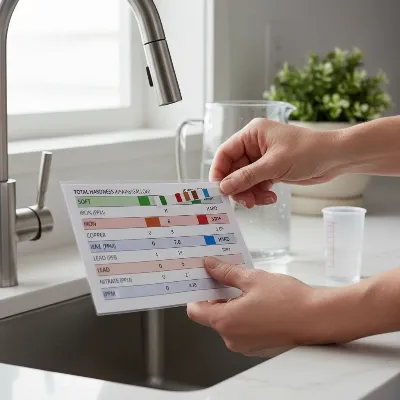 A person using a home water test kit on a sample of well water
Installation and Maintenance of Well Water Softeners
Proper installation and diligent maintenance are key to maximizing the lifespan and efficiency of your well water softener. While some handy homeowners can perform DIY installations, professional installation is often recommended for well water systems, given the potential for unique challenges like varying water pressure or specific contaminant removal requirements.
If you choose a professional, they will ensure the system is correctly plumbed into your main water line (typically before your water heater), bypassing any outdoor spigots you don’t want softened. They will also correctly set up the drain line for regeneration wastewater and connect the power. For DIYers, ensure you have the necessary tools, follow the manufacturer’s instructions precisely, and carefully plan the location near your main water line, a grounded power source, and a drain.
Ongoing maintenance is crucial for well water softeners.
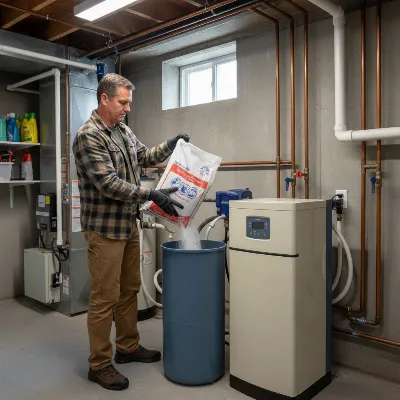 A person refilling the salt in a water softener's brine tank
Where to Buy Water Softeners for Well Water
When you’re ready to invest in a water softener for your well, you have several reliable avenues for purchase. Specialized water treatment companies, both local and online, often provide the most comprehensive service. They can offer expert advice on well water-specific challenges, provide professional water testing, and guide you through the selection process for systems tailored to your water’s unique chemistry. Many of these companies also offer installation and long-term maintenance plans.
Large home improvement stores like Lowe’s or Home Depot carry a selection of water softeners, including some of the popular brands. While these stores offer convenience, the depth of expert advice may vary, and you might need to arrange installation separately. For brands with advanced features or specific well water solutions, purchasing directly from manufacturer websites can provide access to their full product lines, detailed specifications, and direct customer support. Regardless of where you buy, always prioritize vendors who can support you with water testing, sizing recommendations, and after-sales service. Look for transparent return policies and warranty information before making a purchase.
Buying Guide: Essential Considerations When Buying a Well Water Softener
Making an informed decision about a well water softener boils down to a few critical considerations that address the unique aspects of private well ownership. Your final choice should align with your water quality, household needs, and long-term expectations.
Firstly, your water quality test results are paramount. This data, including hardness (GPG), iron (PPM), manganese, and pH, will dictate the type and capacity of softener you need. For example, high iron levels will point you toward systems specifically designed for iron removal or require a pre-filter.
Secondly, assess your household size and average daily water usage. This information, combined with your water hardness, determines the necessary grain capacity of your softener. An undersized system will regenerate too frequently, wasting salt and water, while an oversized one is an unnecessary expense.
Consider the type of softener that best fits your philosophy and water profile: a salt-based ion exchange system for comprehensive hardness and iron removal, or a salt-free conditioner for scale prevention without adding sodium or requiring regeneration. For multifaceted well water issues, a combination system with integrated filtration might be the most effective solution.
Evaluate the regeneration efficiency of salt-based units. Metered (demand-initiated) regeneration is superior as it only cycles when a certain volume of water has been used, conserving salt and water compared to timed regeneration. Pay close attention to the flow rate (GPM) to ensure the system can handle your household’s peak water demand without causing pressure drops.
Lastly, don’t overlook warranty and customer support. A strong warranty reflects the manufacturer’s confidence in their product, and reliable customer service is invaluable for troubleshooting, maintenance advice, and addressing any potential issues over the system’s lifetime. Balance the upfront cost with potential long-term savings on salt, energy, and appliance longevity.
“For well owners, investing in a robust water softener tailored to their specific water chemistry is not just about comfort; it’s a strategic move that significantly extends the life of their plumbing and appliances, saving thousands in potential repairs over the years.” – John M. Stevens, Water Treatment Engineer
Conclusion
Tackling the challenges of hard well water is a significant step towards improving your home’s water quality and protecting your valuable investments. From understanding the adverse effects of excess minerals to exploring the diverse technologies available, selecting the right water softener for your well in 2026 is a decision that impacts every aspect of your daily life. By diligently testing your water, accurately sizing your system, and choosing between effective salt-based, innovative salt-free, or comprehensive combination units, you can ensure a consistent supply of soft, clean water. that proper installation and ongoing maintenance—such as regular salt checks and brine tank cleanings—are just as crucial as the initial purchase. With the right water softener, you’ll not only enjoy softer skin, cleaner dishes, and longer-lasting appliances, but also the peace of mind that comes with a reliable home water system.
Are you ready to improve your well water experience and enjoy the unparalleled benefits of truly soft water?
Frequently Asked Questions
Is softened well water safe to drink?
Yes, softened well water is generally safe to drink if the only issue is hardness. Water softeners remove calcium and magnesium but do not filter out other contaminants like bacteria, viruses, lead, or chemicals. If your well water has other impurities, a separate filtration or purification system is recommended for drinking water.
How much salt does a well water softener typically use?
The amount of salt a water softener uses varies widely based on your water’s hardness level, your household’s water consumption, and the efficiency of the softener. Metered (demand-initiated) regeneration systems are more efficient, only regenerating when needed, which conserves salt compared to older timed models. Expect to refill salt every 1 to 3 months.
Can a water softener remove iron from well water?
Many salt-based water softeners can effectively remove low levels of “clear-water” iron (typically up to 3-5 parts per million, PPM). However, for higher concentrations of iron or for “red-water” iron (particulate iron), a dedicated iron filter or a combination filter/softener system is usually necessary for optimal removal.
What is the average lifespan of a water softener for well water?
A well-maintained salt-based water softener system can last between 10 to 15 years, with the resin beads often requiring replacement around the 10-year mark depending on water quality and usage. Salt-free conditioners can sometimes have a longer lifespan for their media, as they do not undergo regeneration cycles.
What is the main difference between a water softener and a water conditioner?
A water softener physically removes hardness minerals (calcium and magnesium) from the water through an ion exchange process, resulting in truly “soft” water. A water conditioner, particularly a salt-free one using TAC technology, does not remove these minerals but rather alters their structure to prevent them from forming hard scale on surfaces.
Choose the Right Water Softener for Your Well
Selecting the ideal water softener for your well requires a systematic approach tailored to your unique circumstances, ensuring you invest in a system that truly meets your needs and provides lasting benefits.
Obtain a comprehensive water test to determine your well water's hardness level (GPG), iron (PPM), manganese, pH, and sulfur content. These results are the foundational data for selecting the appropriate softener type and capacity.
Calculate the appropriate grain capacity by multiplying your daily water usage (estimated at 75 gallons per person) by your water's hardness level (GPG), adding 5 GPG for every 1 PPM of iron. Aim for a system that handles your weekly hardness load, regenerating every 3-7 days, to prevent frequent, inefficient cycles.
Ensure the system's flow rate (GPM) is adequate for your household's peak water demand to avoid pressure drops. Prioritize softeners with metered (demand-initiated) regeneration, as they are more efficient, only cycling when needed, which conserves both salt and water.
Assess the softener's iron removal capabilities; for iron levels above 3-5 PPM, a specialized iron filter or combination system may be necessary. Always include a pre-filtration system for sediment to protect the softener's resin bed from clogging and damage, extending its lifespan.
Review the warranty and customer support offerings from different manufacturers. A robust warranty provides peace of mind, and reliable customer service is invaluable for troubleshooting and maintenance advice over the system's lifetime, balancing upfront cost with long-term savings.
Get our weekly buyer guide
Practical specs, not advice. Unsubscribe anytime.

Living with well water, I always worried about the long-term effects of hard water on my plumbing and water heater. The information about how these systems reduce hardness by over 97% really convinced me. I invested in one of the higher-rated models and I’m so glad I did. No more worrying about premature appliance damage!
We’ve had a water softener for our well water for about a year now. It does a good job with the calcium and magnesium, and I’ve noticed less spotting on dishes. However, I was hoping for a bit more improvement with the overall water taste, which still has a slight mineral edge. It’s better than before, but not perfect.
My well water always had that slightly metallic smell and I suspected it was iron, even though it wasn’t super visible. I was happy to see that some of these systems, like the one mentioned, can handle up to 3 PPM of clear-water iron. Since installing a new softener, that smell is gone and my laundry seems brighter. I just wish the installation had been a bit simpler.
I was really struggling with hard water from my well, especially the scale buildup on my showerheads and inside my coffee maker. After reading about the SpringWell SS Salt-Based System, I decided to give it a try. It’s been a few months now and I can honestly say it’s made a huge difference. My skin feels less dry and my appliances are definitely looking better.