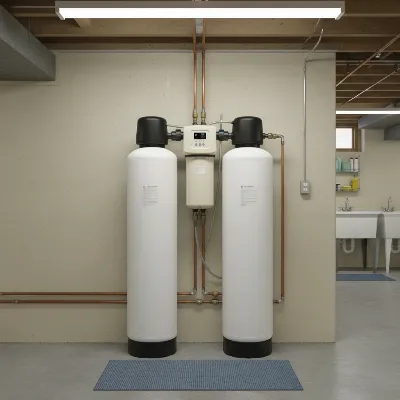
Hard water can be a relentless adversary, silently degrading your home’s plumbing, damaging appliances, and leaving your skin and hair feeling less than ideal. If you’ve ever dealt with stubborn soap scum, cloudy dishes, or dwindling water pressure, you know the frustration. Aquasana, a leader in home water treatment, offers a range of whole house solutions designed to combat these issues. This comprehensive review for 2026 will delve into Aquasana’s whole house water softeners and conditioners, exploring their technology, performance, installation, maintenance, and whether they are the right investment for your home.
Understanding Hard Water and Its Impact
Hard water is a pervasive problem affecting over 85% of American homes, characterized by high concentrations of dissolved minerals, primarily calcium and magnesium. As water percolates through soil and rock formations, it picks up these minerals, leading to the “hardness” you experience in your tap water. While generally safe to drink, hard water presents numerous challenges for homeowners.
The effects of hard water extend beyond mere inconvenience. For your health and hygiene, hard water can leave skin feeling dry, itchy, or irritated, and hair can become dull, brittle, or difficult to lather shampoo with. Your home’s appliances suffer significantly from scale buildup, which is a hard, chalky deposit formed by these minerals. This scale reduces the efficiency and lifespan of water heaters, dishwashers, washing machines, and coffee makers, forcing them to work harder and consume more energy. Plumbing systems are also vulnerable, as scale can accumulate inside pipes, restricting water flow, reducing water pressure, and potentially leading to costly blockages. You can often recognize hard water by the visible signs of white, chalky residue on faucets, showerheads, and glassware, or by laundry feeling stiff and looking faded even after washing.
Aquasana’s Approach to Water Softening: Technology Explained
Aquasana approaches water treatment with a focus on both filtration and conditioning, offering solutions that cater to different water quality concerns. While traditional water softeners remove hardness minerals, Aquasana primarily emphasizes a salt-free conditioning technology that prevents scale without stripping beneficial minerals.
A water softener typically uses an ion-exchange process to replace hard minerals like calcium and magnesium with sodium ions, effectively removing them from the water. A water conditioner, on the other hand, alters the structure of these minerals so they cannot adhere to surfaces, preventing scale buildup without actually removing the minerals.
Aquasana’s core conditioning technology, often seen in their SimplySoft and combined Rhino systems, utilizes Scale Control Media (SCM) or SLOW PHOS polyphosphate beads. This innovative salt-free method works by transforming hard water minerals into microscopic crystals that remain suspended in the water and are flushed away, rather than clinging to pipes and appliances. This means you get significant scale prevention throughout your home without the need for salt, electricity, or wastewater. Unlike traditional salt-based softeners, Aquasana’s salt-free conditioners preserve healthy minerals in your water, which can be a desirable feature for many households.
For those facing very high levels of hardness and preferring the traditional “slippery” feel of truly soft water, Aquasana also offers salt-based softeners in various grain capacities (e.g., 40,000 or 60,000 grains). These systems utilize the classic ion-exchange process and are designed to be more efficient, reportedly using 50% less salt and 28% less water compared to standard time-based softeners.
Many of Aquasana’s most popular products, such as the Rhino EQ-1000, are comprehensive combined systems that integrate robust whole-house filtration with salt-free conditioning. This dual approach ensures that your water is not only free from common contaminants like chlorine, VOCs, and heavy metals but also protected against scale buildup. This emphasis on filtration first, then conditioning, provides a holistic solution for overall water quality improvement.
Aquasana Whole House Water Softener Models: Key Features & Performance
Aquasana offers a diverse range of whole house systems, with its Rhino line being particularly popular for combining filtration and conditioning capabilities. These systems are designed to provide comprehensive water treatment for your entire home.
The Aquasana Rhino EQ-1000 is a flagship model, often hailed as a complete three-in-one system. It typically features advanced activated carbon filtration to remove up to 97% of chlorine, as well as lead, pesticides, herbicides, and volatile organic compounds (VOCs). Some configurations of the EQ-1000 also include a UV sterilization lamp, which is crucial for homes on well water, eliminating 99.99% of bacteria and viruses. Central to its “softening” capabilities is the built-in salt-free conditioner, which uses SCM technology to prevent scale buildup without removing beneficial minerals. The system boasts an impressive 1 million-gallon capacity, translating to 8-10 years of use for an average household, and is often NSF certified (e.g., to standards 42, 53, and 401) for contaminant reduction. While it offers extensive protection, the flow rate, typically around 7 GPM, is suitable for small to medium-sized homes with 1-2 bathrooms, but larger households with high simultaneous water usage might notice a slight drop in pressure.
The advantages of a system like the EQ-1000 are significant: it provides comprehensive protection against a wide array of contaminants and scale, holds reputable NSF certifications, and is designed for a long lifespan. Its modular design allows for component replacement without needing to overhaul the entire system, and the salt-free conditioning is an eco-friendly benefit. However, the initial price point can be higher, especially when opting for all available add-ons like UV filters. Regular pre-filter replacements (every 2-3 months) add to ongoing costs, and the system requires a fair amount of installation space.
For those primarily concerned with scale prevention and not needing extensive filtration or contaminant removal, the Aquasana SimplySoft offers a standalone salt-free water conditioner. This system focuses solely on altering the hard minerals to prevent scale buildup using SLOW PHOS technology, without adding sodium or removing healthy minerals. It’s a low-maintenance option that requires no salt refills or electricity, making it environmentally friendly and easy to upkeep. The primary drawback is that it is a conditioner, not a softener, meaning it won’t give you the “slippery” feel of traditional soft water, and it does not remove other water contaminants.
Aquasana also provides traditional salt-based softeners with capacities like 40,000 or 60,000 grains. These systems utilize the proven ion-exchange method to physically remove calcium and magnesium, delivering genuinely soft water. Aquasana highlights these models for their efficiency, claiming to use 50% less salt and 28% less water during regeneration compared to older systems. They feature customizable settings and an LCD display for easy management. While highly effective for very hard water, these systems do require regular salt refills and involve a regeneration cycle that produces wastewater.
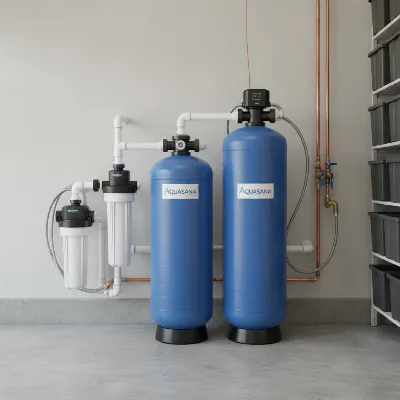 Aquasana Whole House Water Softener system with filtration tanks for home water treatment
Aquasana vs. Competitors: A Brief Comparison
When considering a whole house water treatment system, Aquasana frequently comes up in comparison with other major brands like SpringWell. Each brand has distinct strengths that appeal to different homeowner needs.
Aquasana stands out for its strong emphasis on NSF certifications across its product lines, providing peace of mind through third-party validation of performance. The brand also boasts a long-standing reputation of over 20 years in the water treatment industry. Many of its systems are designed with relative ease of DIY installation in mind, though professional installation is recommended to secure the full 10-year warranty. Aquasana is also recognized for its eco-friendly approach, particularly with its salt-free conditioners that avoid adding sodium to the environment and its efficient salt-based systems. Their combined filtration and conditioning systems offer a comprehensive solution for improving overall water quality and preventing scale.
In contrast, competitors like SpringWell often win praise for their overall value, higher flow rates, and robust warranties, sometimes offering lifetime coverage and longer trial periods. For larger homes with multiple bathrooms where high water flow is critical, systems with higher GPM (gallons per minute) ratings, such as those offered by SpringWell (12-20 GPM vs. Aquasana’s typical 7 GPM for some models), might be more appealing. While Aquasana offers excellent performance in filtration and scale prevention, the trade-off for some models can be a slightly lower flow rate and a potentially higher initial cost compared to some competitors. However, for buyers prioritizing certified quality, established brand trust, and a focus on both filtration and conditioning without salt, Aquasana often justifies its position in the premium segment.
| Feature | Water Softener (Salt-Based) | Water Conditioner (Salt-Free, e.g., Aquasana SimplySoft) |
|---|---|---|
| Pros | Removes hardness minerals completely (true softening) | Prevents scale buildup |
| Creates “slippery” feel for skin/hair, better lathering | Retains healthy minerals (calcium, magnesium) | |
| Highly effective for very hard water (25+ GPG) | No salt required, no regeneration wastewater | |
| Lower ongoing maintenance costs (no salt refills) | ||
| Environmentally friendly | ||
| Cons | Requires regular salt refills (every 4-6 weeks) | Does not remove hardness minerals (no “soft water” feel) |
| Produces wastewater during regeneration | Less effective for extremely hard water | |
| Adds sodium to water (concern for some diets) | Does not remove other contaminants (often paired with filter) | |
| Higher annual maintenance costs (salt, water, media) | ||
| Cost | Higher operating costs (salt, water) | Lower operating costs (no salt, less water) |
| Maintenance | Regular salt checks/refills, brine tank cleaning | Minimal; media replacement every 3-5 years for some models |
How to Choose the Right Aquasana Whole House System
Selecting the ideal Aquasana whole house system involves a thoughtful evaluation of your home’s unique water challenges and your lifestyle preferences. Making an informed decision will ensure you invest in a system that effectively addresses your needs.
First, assess your water quality. This is the most critical step. Purchase a comprehensive water test kit or have your water professionally tested to determine your water hardness level (measured in grains per gallon, or GPG) and identify any specific contaminants present, such as chlorine, lead, iron, VOCs, or bacteria. This data will guide your choice, as some Aquasana systems prioritize filtration, while others focus on conditioning.
Next, consider your household needs and water usage. The number of people in your home, the number of bathrooms, and your typical daily water consumption (e.g., simultaneous showers, laundry, dishwasher use) will help determine the necessary flow rate (GPM) and capacity of your system. While a 7 GPM flow rate is adequate for many small to medium homes, larger households might need to consider systems or configurations that ensure sufficient pressure.
Evaluate the system type that best suits your goals:
- Salt-Based Softener: If your water hardness is very high (above 20-25 GPG) and you desire the distinct “slippery” feel of truly soft water, a salt-based Aquasana softener that removes minerals might be your best option.
- Salt-Free Conditioner: If your primary concern is scale prevention, you want to retain healthy minerals in your water, or you prefer an eco-friendlier, lower-maintenance solution without adding sodium, a salt-free conditioner like the SimplySoft or a combined Rhino system is ideal, especially for moderate hardness levels.
Factor in your budget, considering both the initial purchase price and the long-term operational costs. While salt-free conditioners typically have lower ongoing maintenance, salt-based systems require regular salt purchases. Aquasana’s combined filter and conditioner systems might have a higher upfront cost but offer comprehensive protection.
Finally, always prioritize certifications and warranty. Aquasana’s NSF certifications (e.g., NSF/ANSI Standards 42, 53, 401) provide assurance of performance. Be aware that Aquasana’s impressive 10-year warranty on many main components often requires professional installation to remain fully valid.
Installation and Maintenance for Aquasana Systems
Proper installation and routine maintenance are crucial for ensuring your Aquasana whole house system performs optimally and provides years of reliable service. Understanding these aspects will help maximize your investment.
For installation, while many Aquasana systems are designed with DIY-friendly instructions, professional installation is frequently recommended, particularly if you want to ensure the full 10-year warranty is honored. A professional plumber will ensure the system is correctly integrated into your main water line, that bypass valves are properly installed, and that there are no leaks. Keep in mind that these systems, especially the multi-stage Rhino models, can be quite large, requiring sufficient space in your garage, basement, or utility room.
Ongoing maintenance varies slightly depending on your specific Aquasana system.
- Pre-filters: For filtration systems like the Rhino, pre-filters typically need to be replaced every 2-3 months to prevent sediment buildup from impacting the main filters and flow rate. Aquasana often offers a bypass kit that makes these changes easier without shutting off water to the entire house.
- Main filter tanks: The large main filter tanks in systems like the EQ-1000 boast an impressive lifespan of up to 1 million gallons or 8-10 years, making their replacement infrequent.
- Salt-based softeners: If you have a salt-based Aquasana softener, you’ll need to regularly check and refill salt levels in the brine tank, typically every 4-6 weeks, ensuring the salt level stays above the water. It’s also recommended to periodically clean the brine tank to prevent issues like salt bridges (a crust of hardened salt) or salt mushing, which can hinder the system’s ability to regenerate effectively. Use high-quality pellet salt to minimize these problems.
- Salt-free conditioners: Aquasana’s salt-free conditioners like SimplySoft generally require minimal maintenance, primarily involving media replacement every 3-5 years, depending on water usage and quality.
Common issues to watch for include a noticeable return of hard water symptoms (spots, dry skin), reduced water flow, or a salt-based system that is regenerating too frequently or not using salt. Addressing these promptly, either through simple maintenance or by consulting a professional, will help extend the system’s life and maintain water quality.
Where to Buy Aquasana Water Softeners
Acquiring an Aquasana whole house water softener or conditioner is straightforward, with several reputable channels available to consumers. The primary and most direct option is the official Aquasana website. Purchasing directly from Aquasana often provides access to the latest models, comprehensive product information, customer support, and sometimes exclusive promotions or bundled offers, including their filter replacement program that ships discounted filters on a schedule.
Beyond the official site, Aquasana products are also available through authorized dealers and various online retailers. Major e-commerce platforms like Amazon, Walmart, and other home improvement or water treatment specialty stores often stock a range of Aquasana’s whole house systems. When purchasing from third-party retailers, ensure they are authorized to sell Aquasana products to guarantee warranty eligibility and genuine components. It’s always a good practice to compare prices across different vendors and check for current sales or discounts to get the best value.
The Verdict: Is an Aquasana Whole House Water Softener Right for You?
The Aquasana whole house water softener and conditioner systems present compelling solutions for enhancing your home’s water quality in 2026. Their strength lies in a multi-pronged approach that often combines robust filtration with effective scale prevention, backed by strong NSF certifications and a solid brand reputation.
If your primary concern is comprehensive water improvement—tackling contaminants like chlorine and lead while also preventing scale buildup—Aquasana’s combined filter and salt-free conditioner systems, such as the Rhino EQ-1000, are an excellent choice. They are ideal for environmentally conscious homeowners who appreciate retaining healthy minerals, desire a low-maintenance solution without salt, and are willing to invest in a premium, long-lasting system. For households with moderate water hardness, the scale-prevention benefits are significant, protecting appliances and plumbing.
However, if your home has extremely hard water (well above 25 GPG) and you specifically seek the distinct “soft water” feel (e.g., slippery skin, extreme lathering), a traditional salt-based Aquasana softener might be more suitable. These systems undeniably remove hardness minerals entirely, offering a different experience. It is important to distinguish between “softening” (mineral removal) and “conditioning” (scale prevention) when making your decision.
The investment in an Aquasana whole house system is substantial, and factors like the need for professional installation for the full warranty, regular pre-filter changes, and space requirements should be weighed carefully. Ultimately, Aquasana excels at providing certified, reliable solutions for clean, scale-protected water.
Consider your specific water test results, household size, budget, and desired water feel. Are you looking for comprehensive filtration and scale prevention without the use of salt, or do you require traditional water softening for extreme hardness? By aligning Aquasana’s offerings with your unique needs, you can confidently choose a system that transforms your home’s water.
Frequently Asked Questions
How often do Aquasana filters need changing?
Table is empty.For Aquasana whole house systems like the Rhino, the pre-filters typically need replacement every 2-3 months. The main filter tanks, however, are designed for a much longer lifespan, often lasting up to 8-10 years or 1 million gallons, depending on water usage and quality. Salt-free conditioning media generally lasts 3-5 years.
Does Aquasana really soften water?
Aquasana offers both salt-based Water Softeners, which truly soften water by removing hardness minerals through ion exchange, and salt-free water conditioners (like SimplySoft or integrated into Rhino systems). The salt-free conditioners prevent scale buildup by altering mineral structure but do not remove the minerals, so they won’t provide the “slippery” feel of traditionally softened water.
Is Aquasana worth the price?
Many users find Aquasana systems to be a worthwhile investment due to their comprehensive filtration capabilities, effective scale prevention, NSF certifications, and long lifespan (up to 10 years for main components). While the initial cost can be higher than some alternatives, the long-term benefits of improved water quality, appliance protection, and reduced environmental impact often justify the expense.
What is the flow rate of Aquasana whole house systems?
The flow rate for Aquasana’s whole house filtration and conditioning systems, such as the Rhino EQ-1000, is typically around 7 gallons per minute (GPM). This is sufficient for most small to medium-sized homes with 1-2 bathrooms but may be a limiting factor for larger households or those with high, simultaneous water usage across multiple fixtures.
Can I install an Aquasana system myself?
While Aquasana provides instructions for DIY installation, professional installation is highly recommended. Not only does it ensure the system is correctly set up for optimal performance and to prevent leaks, but it is often a requirement to maintain the full 10-year warranty on many of Aquasana’s whole house systems.