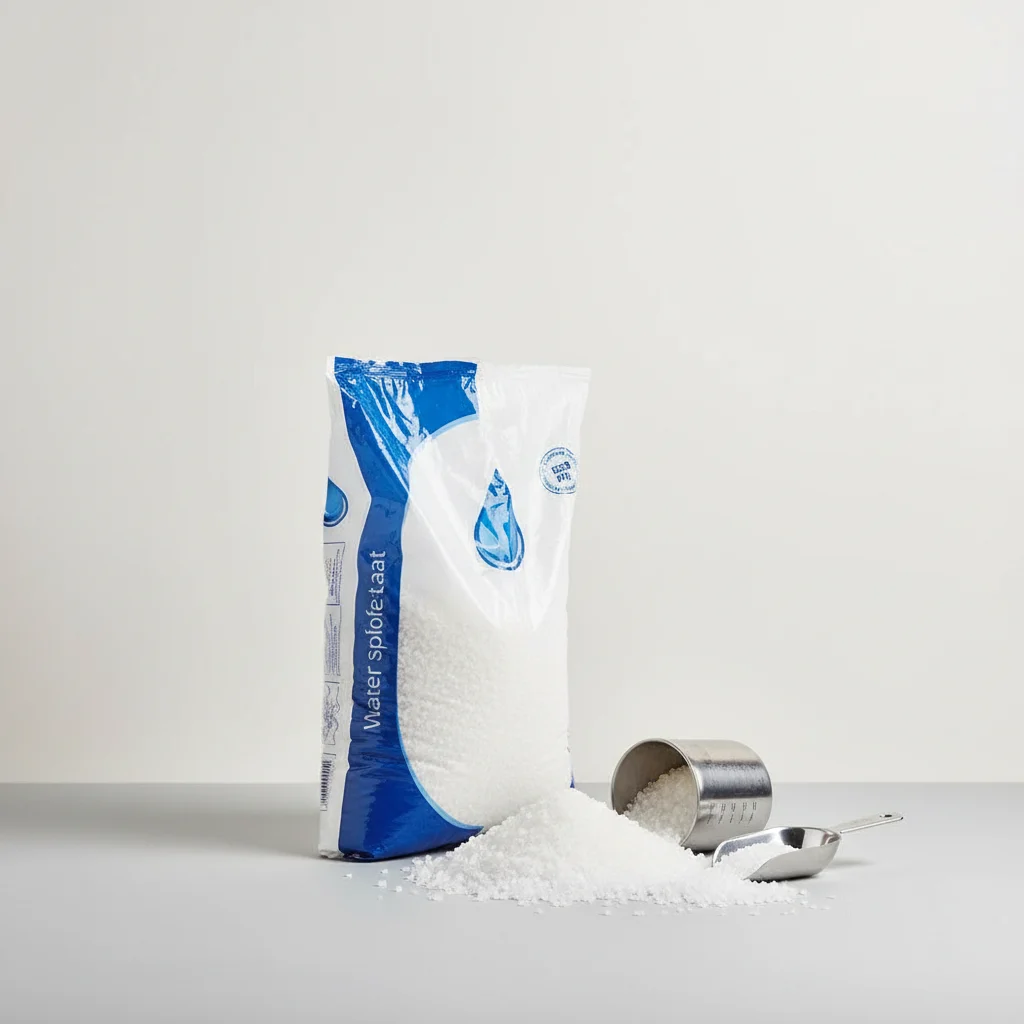
For most standard residential water softeners, you should aim to keep the salt level at least one-quarter full, but ideally, it should be maintained at about two-thirds full to ensure consistent regeneration cycles. This typically translates to adding a 40-pound bag of salt every 4 to 8 weeks, depending on your household’s water usage and hardness levels. Understanding the correct amount of water softener salt to use is crucial for optimal system performance and water quality.
Why Salt Levels Matter for Your Water Softener
The salt in your water softener, specifically sodium chloride or potassium chloride, plays a vital role in the ion exchange process. During regeneration, the brine solution created from the salt flushes out the hard mineral ions (calcium and magnesium) that have accumulated on the resin beads. If the salt level drops too low, the resin beads cannot be properly recharged, leading to a decrease in the softener’s efficiency and the return of hard water to your home. Consistent salt levels ensure that your system can effectively remove hardness minerals, providing you with soft water for all your household needs.
Factors Influencing Salt Consumption
Several factors dictate how much salt your water softener will consume. The primary factors include the hardness of your incoming water, the size of your household, and your daily water usage. Homes with very hard water will require more frequent regeneration cycles and thus more salt. Similarly, larger families or those with high water consumption (e.g., multiple showers daily, frequent laundry) will deplete salt faster. The efficiency of your specific water softener model also plays a role; newer, high-efficiency models are designed to use less salt per regeneration.
Types of Water Softener Salt
|
Our Picks for the Best Water Softener in 2026
As an Amazon Associate I earn from qualifying purchases.
|
||
| Num | Product | Action |
|---|---|---|
| 1 | PRO+AQUA 16,000 Grain Portable Water Softener for RV, Trailers, Boats, Mobile Car Wash, Pressure Wash – Protects Water Systems from Hard Water Damage and Corrosion, with Pre-Filled High-Capacity Resin |

|
| 2 | RVGUARD 16,000 Grains Portable Water Softener for RV, Reduces Hardness & Minerals & Improve Water Quality, Protects Water Systems from Hard Water Damage |
|
| 3 | H&G Lifestyles Whole House Water Softener 32,000 Grains, NSF certified Whole Home Water Filtration System for Well & City Water, Remove Calcium Magnesium, Food Grade Resin, Silver-Enhanced, 700,000 Gl |
|
| 4 | On The Go OTG4-VM-DBLSOFT Portable Compact Double Standard 16,000 Grain Water Softener with Drinking Water Safe Brass Fittings (NOT made in China, assembled by U.S. Workers in Indiana |
|
| 5 | iSpring ED2000 Whole House Water Descaler, Alternative Electronic Salt-Free Hard Water Conditioner, Reduces Limescale Prevent Deposits Build-up, Different from a Water Softener |
|
| 6 | Crystala Filters Portable RV Water Softener, 16,000 Grain with Stainless Steel Garden Hose Quick Connects for RVs, Trailers, Boats, Mobile Car Washing, Pressure Washing |
|
| 7 | RV Water Softener System with Heavy Metal Filter & Protective Cover | 16,000 Grain Capacity | Removes Odors, Extends Resin Life 15% | Universal Fit for Motorhome, Camper, Travel Trailer |
|
| 8 | RV Water Softener with Water Hose, 16000 Grains 3/4" Brass Fittings Food-Grade Resin Soften Hard Water Improve Water Quality Portable Water Softener for RV, Trailers |
|
| 9 | Electronic Water Descaler System for Whole House, Salt-Free Water Softener - Compatible with Most Pipes, Prevents Limescale Build-Up, Easy Install & Maintenance-Free |
|
| 10 | VEVOR RV Water Softener, 16,000 Grain Portable Water Softener, with 3/4" Brass Fittings and 42" Hose, Soften Hard Water Filter System for RVs, Trailers, Boats, Mobile Car Washing, Pressure Washing |
|
Choosing the right type of salt can also impact your system’s performance and longevity. There are three main types: rock salt, solar salt, and evaporated salt. Rock salt is the least refined and can leave insoluble matter, potentially leading to bridging or clogging. Solar salt is purer and dissolves more easily, making it a good choice for most systems. Evaporated salt is the purest form, ideal for systems that require high purity or for those looking to minimize residue. Always refer to your water softener’s manual for recommended salt types.
How to Check and Add Salt to Your Water Softener
Regularly checking your water softener’s salt level is a simple yet essential maintenance task. Most manufacturers recommend checking the salt tank once a month. To do this, simply lift the lid of the brine tank and visually inspect the salt level. If it’s below one-quarter full, it’s time to add more. When adding salt, pour it directly into the brine tank, being careful not to overfill it. Leave at least 6 inches of space from the top of the tank to prevent salt from spilling over during regeneration. Avoid letting the tank become completely empty, as this can lead to hard water and may require a manual regeneration cycle to restore soft water.
- Inspect salt level monthly to ensure it’s at least one-quarter full.
- Maintain salt level at approximately two-thirds full for best results.
- Use high-quality solar or evaporated salt to prevent bridging.
- Avoid overfilling the brine tank; leave 6 inches of space.
- Consider a salt monitor for automatic alerts on low salt levels.
Troubleshooting Common Salt-Related Issues
Sometimes, even with regular salt additions, your water softener might not be performing optimally. One common issue is a ‘salt bridge,’ where the salt forms a hard crust at the top of the tank, preventing it from dissolving into the water below. You can break a salt bridge by carefully poking it with a broom handle or similar blunt object. Another issue is ‘mushing,’ where the salt turns into a slushy consistency, often due to high humidity or using the wrong type of salt. If you notice these problems, ensure you are using the correct salt type and consider adjusting the environment around your softener if humidity is a factor.
Frequently Asked Questions
How often should I add salt to my water softener?
You should typically add a 40-pound bag of water softener salt every 4 to 8 weeks. This frequency depends on your household's water usage and the hardness levels of your incoming water. Regular monthly checks of the salt tank are recommended to ensure optimal performance.
What is the ideal salt level to maintain in a water softener?
The ideal salt level to maintain in a water softener is about two-thirds full. While a minimum of one-quarter full is acceptable, keeping it at two-thirds ensures consistent regeneration cycles and prevents the system from running out of salt prematurely. This helps maintain soft water throughout your home.
What are the different types of salt for water softeners?
There are three main types of salt for water softeners: rock salt, solar salt, and evaporated salt. Rock salt is the least refined, while solar salt is purer and dissolves easily. Evaporated salt is the purest form, ideal for minimizing residue and ensuring high purity in your system.
What causes a salt bridge in a water softener and how do I fix it?
A salt bridge occurs when salt forms a hard crust at the top of the tank, preventing it from dissolving. This can be caused by high humidity or using the wrong type of salt. To fix it, carefully break the crust with a broom handle or a similar blunt object to allow the salt to dissolve properly.
Can using the wrong type of salt damage my water softener?
Using the wrong type of salt, particularly less refined rock salt, can lead to issues like bridging or mushing in your water softener. These problems can hinder the regeneration process and reduce the system's efficiency. Always refer to your water softener's manual for recommended salt types to ensure longevity.
How to Check and Add Salt to Your Water Softener
Regularly checking and adding salt to your water softener is a simple maintenance task that ensures optimal system performance and consistent soft water.
Lift the lid of your brine tank and visually inspect the salt level. Most manufacturers recommend checking it once a month to ensure it's at least one-quarter full.
For best results, aim to keep the salt level at approximately two-thirds full. This ensures consistent regeneration cycles and prevents the system from running out of salt.
If the salt level is low, pour high-quality solar or evaporated salt directly into the brine tank. Be careful not to overfill, leaving at least 6 inches of space from the top to prevent spills during regeneration.
Never let the tank become completely empty, as this can lead to hard water. An empty tank may require a manual regeneration cycle to restore soft water, which takes extra effort.
Get our weekly buyer guide
Practical specs, not advice. Unsubscribe anytime.

This really clarified why salt levels matter for optimal system performance. I used to let it get pretty low before refilling, but now I’m much more diligent about keeping it topped up. My hair feels so much softer, and I’ve noticed less scale buildup in the shower since I started following the two-thirds rule.
I appreciate the advice on maintaining salt levels. However, I still find it a bit tricky to gauge exactly when to add more, especially with our fluctuating water usage. I try to keep it at least one-quarter full, but sometimes I forget and the regeneration cycles aren’t as consistent as I’d like.
I always wondered if I was using enough salt. The tip about sodium chloride versus potassium chloride was really helpful. I’ve been using potassium chloride because I’m trying to reduce sodium intake, and it’s good to know it works just as effectively for the ion exchange process.
I used to just eyeball my salt levels, but after reading about keeping it at two-thirds full, my water quality has been noticeably better. I’m adding a 40-pound bag every 6 weeks now, and it seems to be the perfect balance for our family of four. No more spots on the dishes!