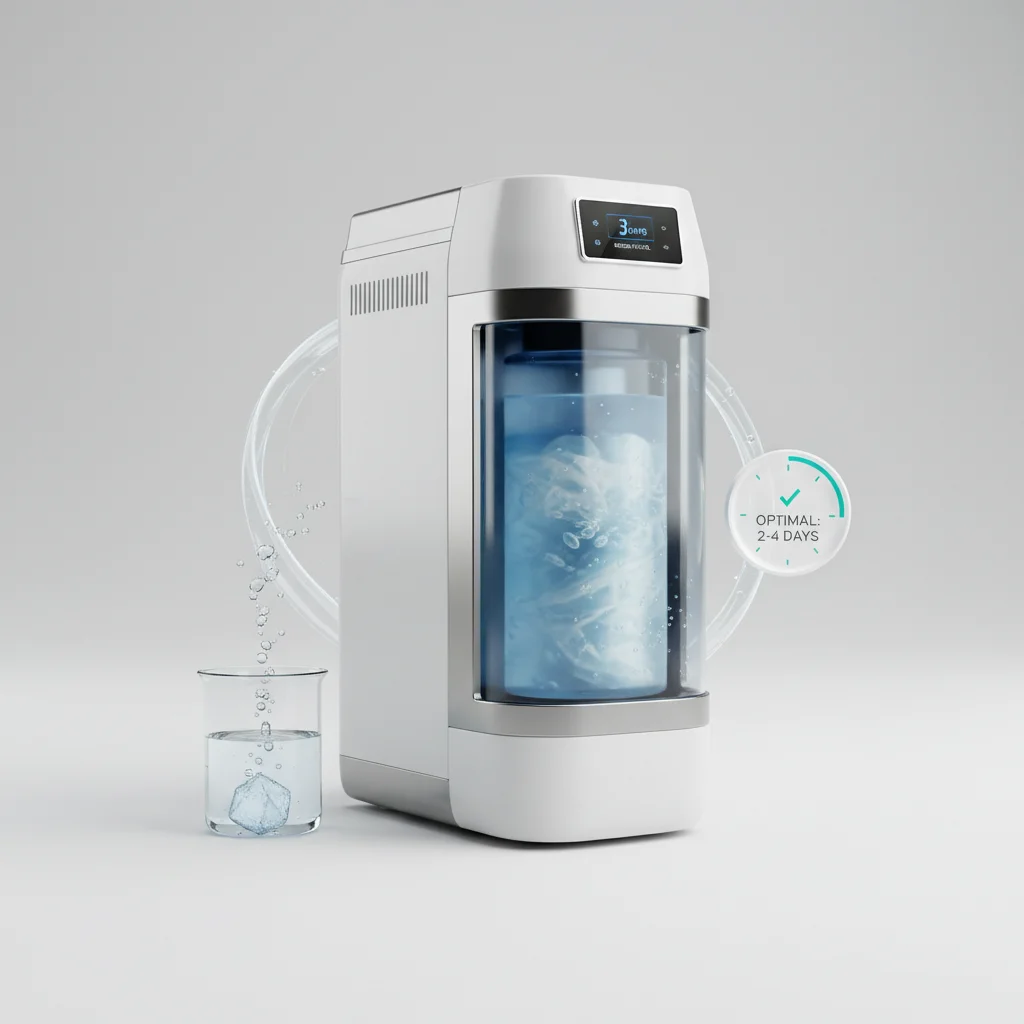
The ideal frequency for a water softener regeneration cycle is typically every 3 to 7 days, depending on your household’s water hardness, daily water consumption, and the capacity of your specific water softener unit. Understanding this cycle is crucial for maintaining soft water and extending the lifespan of your system.
Understanding the Regeneration Process
Water softener regeneration is the process by which the resin beads inside your softener are cleaned and recharged with sodium or potassium ions. As hard water passes through the resin, calcium and magnesium ions (which cause hardness) are exchanged for sodium or potassium ions. Over time, the resin becomes saturated with hardness minerals and needs to be regenerated to restore its softening capability. This process usually involves several stages: backwash, brine draw, slow rinse, and fast rinse. For see our home water recommendations on this site.
Factors Influencing Regeneration Frequency
Several key factors determine how often your water softener needs to regenerate. The most significant is your water hardness level, measured in grains per gallon (GPG). Higher GPG means more frequent regeneration. Your household’s daily water usage also plays a critical role; a family of four using 200 gallons per day will deplete the resin faster than a single person. Finally, the grain capacity of your water softener (e.g., 32,000 grains, 48,000 grains) dictates how much hardness it can remove before needing to regenerate. A larger capacity unit will regenerate less frequently under the same conditions.
- Water Hardness (GPG): Higher hardness requires more frequent cycles.
- Household Water Usage: More water consumed means more frequent regeneration.
- Softener Grain Capacity: Larger capacity units regenerate less often.
- Resin Bed Age: Older resin may become less efficient, requiring more frequent cycles.
- Iron Content: High iron can foul resin, impacting regeneration needs.
Optimizing Your Regeneration Schedule
|
Our Picks for the Best Water Softener in 2026
As an Amazon Associate I earn from qualifying purchases.
|
||
| Num | Product | Action |
|---|---|---|
| 1 | Crystala Filters Portable RV Water Softener, 16,000 Grain with Stainless Steel Garden Hose Quick Connects for RVs, Trailers, Boats, Mobile Car Washing, Pressure Washing |

|
| 2 | On The Go OTG4-VM-DBLSOFT Portable Compact Double Standard 16,000 Grain Water Softener with Drinking Water Safe Brass Fittings (NOT made in China, assembled by U.S. Workers in Indiana |
|
| 3 | Electronic Water Descaler System for Whole House, Salt-Free Water Softener - Compatible with Most Pipes, Prevents Limescale Build-Up, Easy Install & Maintenance-Free |
|
| 4 | H&G Lifestyles Whole House Water Softener 32,000 Grains, NSF certified Whole Home Water Filtration System for Well & City Water, Remove Calcium Magnesium, Food Grade Resin, Silver-Enhanced, 700,000 Gl |
|
| 5 | RV Water Softener with Water Hose, 16000 Grains 3/4" Brass Fittings Food-Grade Resin Soften Hard Water Improve Water Quality Portable Water Softener for RV, Trailers |
|
| 6 | iSpring ED2000 Whole House Water Descaler, Alternative Electronic Salt-Free Hard Water Conditioner, Reduces Limescale Prevent Deposits Build-up, Different from a Water Softener |
|
| 7 | VEVOR RV Water Softener, 16,000 Grain Portable Water Softener, with 3/4" Brass Fittings and 42" Hose, Soften Hard Water Filter System for RVs, Trailers, Boats, Mobile Car Washing, Pressure Washing |
|
| 8 | RV Water Softener System with Heavy Metal Filter & Protective Cover | 16,000 Grain Capacity | Removes Odors, Extends Resin Life 15% | Universal Fit for Motorhome, Camper, Travel Trailer |
|
| 9 | PRO+AQUA 16,000 Grain Portable Water Softener for RV, Trailers, Boats, Mobile Car Wash, Pressure Wash – Protects Water Systems from Hard Water Damage and Corrosion, with Pre-Filled High-Capacity Resin |
|
| 10 | RVGUARD 16,000 Grains Portable Water Softener for RV, Reduces Hardness & Minerals & Improve Water Quality, Protects Water Systems from Hard Water Damage |
|
To optimize your water softener’s regeneration schedule, you should first test your water hardness. Many local water utilities provide this information, or you can use a home test kit. Once you know your hardness and estimate your daily water usage, you can calculate the ideal regeneration frequency. Most modern water softeners are demand-initiated, meaning they regenerate based on actual water usage, which is more efficient than time-based systems. Consult your softener’s manual for specific programming instructions. Over-regenerating wastes salt and water, while under-regenerating results in hard water.
For optimal performance, consider installing a high-efficiency water softener that can learn your water usage patterns and adjust its regeneration schedule automatically. These advanced systems can significantly reduce salt and water consumption.is an excellent option for those looking to upgrade to a more intelligent system that minimizes waste while ensuring consistent soft water throughout your home.
Signs Your Water Softener Needs Attention
If your water softener isn’t regenerating effectively, you might notice several signs. The most obvious is the return of hard water symptoms, such as soap not lathering well, mineral spots on dishes, and dry skin or hair. You might also observe a decrease in water pressure or an unusual amount of salt consumption. If your unit is regenerating too frequently, it could indicate an issue with the settings or a leak in the system. Conversely, if it’s not regenerating often enough, the resin may be exhausted, or there could be a sensor malfunction. Regular maintenance, including checking salt levels and cleaning the brine tank, can prevent many common issues.
Ensuring your water softener regenerates at the correct frequency is vital for its efficiency and the quality of your water. By understanding the factors involved and performing regular checks, you can maintain a consistent supply of soft water. For those seeking a reliable and efficient solution,offers a range of water softeners designed for various household needs, ensuring your regeneration cycles are always optimized.
Frequently Asked Questions
How often should a water softener regenerate?
A water softener should regenerate every 3 to 7 days. This frequency is determined by factors such as your water's hardness level, the amount of water your household uses daily, and the specific grain capacity of your water softener unit.
What factors influence how often a water softener regenerates?
Several factors influence regeneration frequency, including water hardness (measured in GPG), household water usage (e.g., a family of four using 200 gallons per day), and the softener's grain capacity (e.g., 32,000 or 48,000 grains). Older resin beds and high iron content can also increase regeneration needs.
What are the stages of the water softener regeneration process?
The water softener regeneration process typically involves several stages: backwash, brine draw, slow rinse, and fast rinse. These steps clean the resin beads and recharge them with sodium or potassium ions, restoring the softener's ability to remove hardness minerals.
How can I optimize my water softener's regeneration schedule?
To optimize your schedule, first test your water hardness and estimate daily water usage. Most modern softeners are demand-initiated, regenerating based on actual usage, which is more efficient than time-based systems. Consult your softener's manual for specific programming instructions to avoid wasting salt and water.
What are the signs that a water softener needs attention?
Signs your water softener needs attention include the return of hard water symptoms like poor soap lathering, mineral spots on dishes, and dry skin. Other indicators are decreased water pressure, unusual salt consumption, or the unit regenerating too frequently or not often enough.
Get our weekly buyer guide
Practical specs, not advice. Unsubscribe anytime.

Our old system was regenerating way too often, and I think it was wasting salt. After learning about how water hardness affects the cycle, I got my water tested and adjusted our settings. It’s made a noticeable difference in our salt usage and the consistency of our soft water.
I used to just let my water softener run whenever, but after reading about the 3-7 day ideal cycle, I adjusted mine. My water feels even softer now, and I’m hoping this helps with the lifespan of the unit. It’s great to finally understand the backwash and brine draw stages too.
This was really helpful for understanding why my water softener needs to regenerate. I always wondered about the resin beads getting saturated with calcium and magnesium. My only minor complaint is that it didn’t go into super specific detail about potassium chloride vs. sodium chloride for the regeneration process, but still a solid read.
I’ve been trying to figure out the best frequency for my system. My water consumption varies a lot, so sticking to a strict 3-7 day schedule is a bit tricky. I wish there was more guidance on how to calculate it precisely for fluctuating usage, but the explanation of the slow rinse and fast rinse was clear.