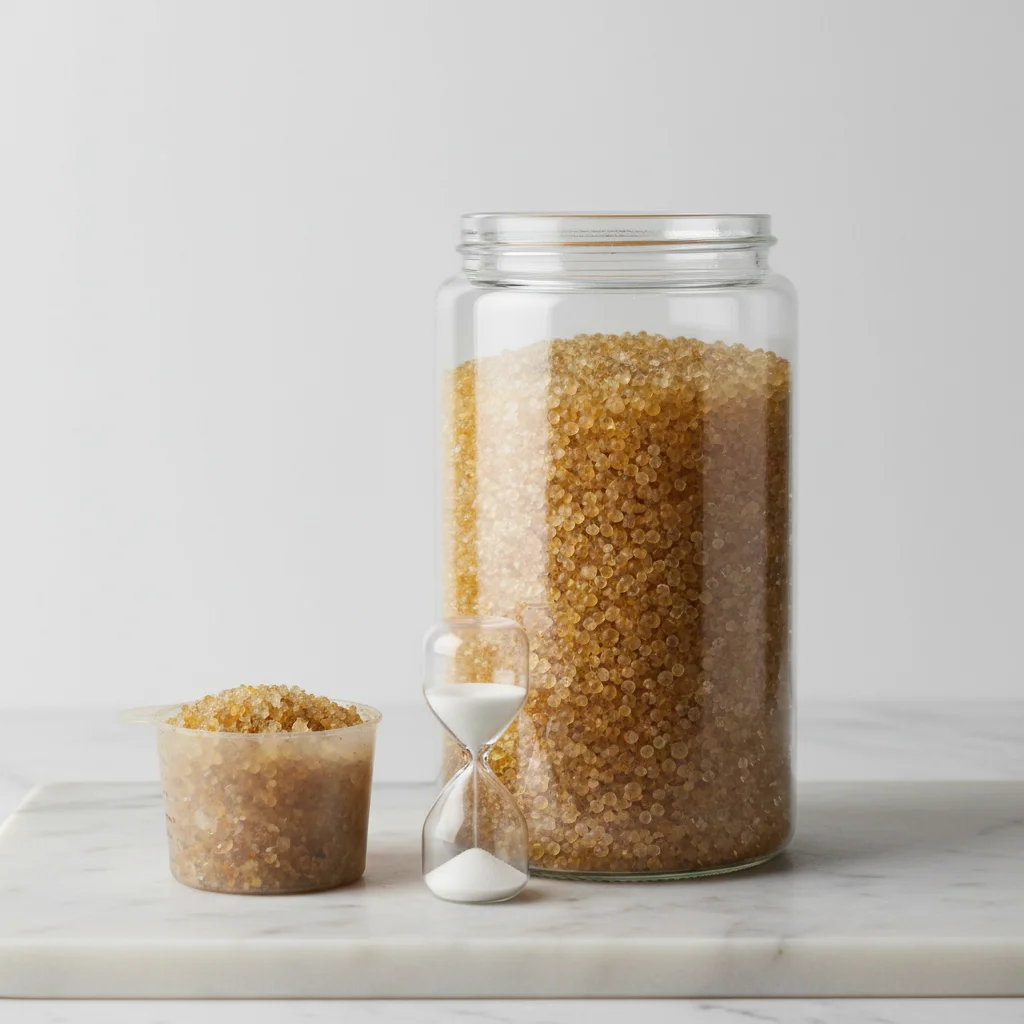
The resin in your water softener is the heart of its softening process, and its lifespan is a critical factor in maintaining soft water in your home. On average, water softener resin lasts between 10 to 15 years, though this can vary significantly based on water quality, usage, and the type of resin. Understanding the factors that influence its longevity can help you anticipate when a replacement might be necessary, ensuring continuous efficiency and preventing hard water issues.
Factors Affecting Resin Lifespan
Several key factors dictate how long your water softener resin will remain effective. The most significant is the quality of your incoming water. High levels of chlorine, iron, or sediment can degrade resin beads more quickly. Chlorine, often present in municipal water supplies, acts as an oxidant, breaking down the resin’s polymer structure over time. Iron and other heavy metals can foul the resin, coating the beads and reducing their ability to exchange ions. Furthermore, the frequency of regeneration cycles, which is tied to your water hardness and household water consumption, also plays a role. More frequent regenerations mean more exposure to brine and mechanical stress, which can shorten the resin’s life.
Signs Your Resin Is Failing
Recognizing the signs of failing resin is crucial for timely replacement. The most obvious indicator is a gradual return of hard water symptoms, such as scale buildup on fixtures, dry skin and hair, and soap that doesn’t lather well. You might also notice an increase in salt consumption without a corresponding improvement in water softness, indicating that the resin is less efficient at ion exchange. Another sign can be a change in the color of the resin beads themselves, which may appear darker or clumped together when inspected. If your water softener is regenerating more frequently than usual but still not producing soft water, it’s a strong signal that the resin is nearing the end of its useful life.
Extending Resin Life Through Maintenance
|
Our Picks for the Best Water Softener in 2026
As an Amazon Associate I earn from qualifying purchases.
|
||
| Num | Product | Action |
|---|---|---|
| 1 | On The Go OTG4-VM-DBLSOFT Portable Compact Double Standard 16,000 Grain Water Softener with Drinking Water Safe Brass Fittings (NOT made in China, assembled by U.S. Workers in Indiana |

|
| 2 | Electronic Water Descaler System for Whole House, Salt-Free Water Softener - Compatible with Most Pipes, Prevents Limescale Build-Up, Easy Install & Maintenance-Free |
|
| 3 | VEVOR RV Water Softener, 16,000 Grain Portable Water Softener, with 3/4" Brass Fittings and 42" Hose, Soften Hard Water Filter System for RVs, Trailers, Boats, Mobile Car Washing, Pressure Washing |
|
| 4 | iSpring ED2000 Whole House Water Descaler, Alternative Electronic Salt-Free Hard Water Conditioner, Reduces Limescale Prevent Deposits Build-up, Different from a Water Softener |
|
| 5 | RVGUARD 16,000 Grains Portable Water Softener for RV, Reduces Hardness & Minerals & Improve Water Quality, Protects Water Systems from Hard Water Damage |
|
| 6 | RV Water Softener System with Heavy Metal Filter & Protective Cover | 16,000 Grain Capacity | Removes Odors, Extends Resin Life 15% | Universal Fit for Motorhome, Camper, Travel Trailer |
|
| 7 | PRO+AQUA 16,000 Grain Portable Water Softener for RV, Trailers, Boats, Mobile Car Wash, Pressure Wash – Protects Water Systems from Hard Water Damage and Corrosion, with Pre-Filled High-Capacity Resin |
|
| 8 | H&G Lifestyles Whole House Water Softener 32,000 Grains, NSF certified Whole Home Water Filtration System for Well & City Water, Remove Calcium Magnesium, Food Grade Resin, Silver-Enhanced, 700,000 Gl |
|
| 9 | Crystala Filters Portable RV Water Softener, 16,000 Grain with Stainless Steel Garden Hose Quick Connects for RVs, Trailers, Boats, Mobile Car Washing, Pressure Washing |
|
| 10 | RV Water Softener with Water Hose, 16000 Grains 3/4" Brass Fittings Food-Grade Resin Soften Hard Water Improve Water Quality Portable Water Softener for RV, Trailers |
|
While resin has a finite lifespan, proper maintenance can help maximize its efficiency and extend its service life. Regularly flushing your resin tank can help remove sediment and iron buildup. Using a resin cleaner, especially if you have high iron content in your water, can rejuvenate the beads and improve their performance. Ensuring your water softener is properly sized for your household’s needs and water hardness prevents overworking the system. Additionally, if your water supply contains high levels of chlorine, consider installing a whole-house carbon filter upstream of your water softener to protect the resin from oxidative damage.These proactive steps can significantly delay the need for a full resin replacement.
When to Replace Your Water Softener Resin
Replacing your water softener resin is a significant maintenance task that can restore your system’s performance. While the 10-15 year guideline is a good starting point, the actual timing depends on the factors discussed. If you’ve noticed a persistent decline in water softness despite regular maintenance and proper salt levels, it’s likely time for a resin replacement. You can also test your water hardness regularly to monitor the softener’s effectiveness. When replacing, consider the type of resin; standard gel-type resin is common, but fine mesh or high-capacity resins are available for specific water conditions or higher efficiency.Consulting with a water treatment professional can help you determine the best resin type for your specific needs and ensure proper installation.
- Monitor water hardness regularly with a test kit.
- Observe for increased scale buildup on appliances and fixtures.
- Note if soap lathers less effectively than before.
- Check for unusually high salt consumption without soft water results.
- Inspect resin beads for discoloration or clumping if accessible.
Get our weekly buyer guide
Practical specs, not advice. Unsubscribe anytime.

This was super helpful! I’ve been trying to figure out if I need to replace my resin or if my system just needs a good cleaning. Knowing that high levels of chlorine are a major culprit for resin breakdown really clarified things for me. My skin and hair have been feeling so much better since we got our softener, and I want to keep it that way!
Good info here! I always wondered why my resin seemed to degrade faster than my neighbor’s. Turns out, our well water has a lot more iron, which was mentioned as a factor. It’s good to know that not all resin lasts the full 15 years, especially with challenging water conditions. I’m planning on testing my water again before I decide on a replacement.
I’ve had my system for 8 years and I’m already seeing issues, which is a bit disappointing since I was hoping for closer to the 10-year average. I guess my water quality must be worse than I thought. The part about sediment degrading the beads makes me think I need to check my pre-filter more often. It’s a hassle to replace the resin, but I know it’s necessary.
I’ve had my water softener for about 12 years now, and I was starting to notice some hard water spots again. After reading about how chlorine can really break down the resin, it made total sense. We have pretty high chlorine in our city water. I’m definitely going to look into replacing the resin soon to get back to that soft water feeling.